
 Do children’s book authors make good role models? They certainly make good ones up—Atticus, Katniss, Haroun, and Matilda to name a few—but what about the writers themselves? In my experience, the answer is yes.
With children’s books it seems there is a special, collaborative relationship between writer and reader. Children are not just the audience but the inspiration; their playfulness and honesty, a book’s fuel and feature. When that relationship extends off the page and writers engage with children through school visits or the web, for example, the benefits go far beyond publicity, and children go from being inspiration to being inspired themselves.
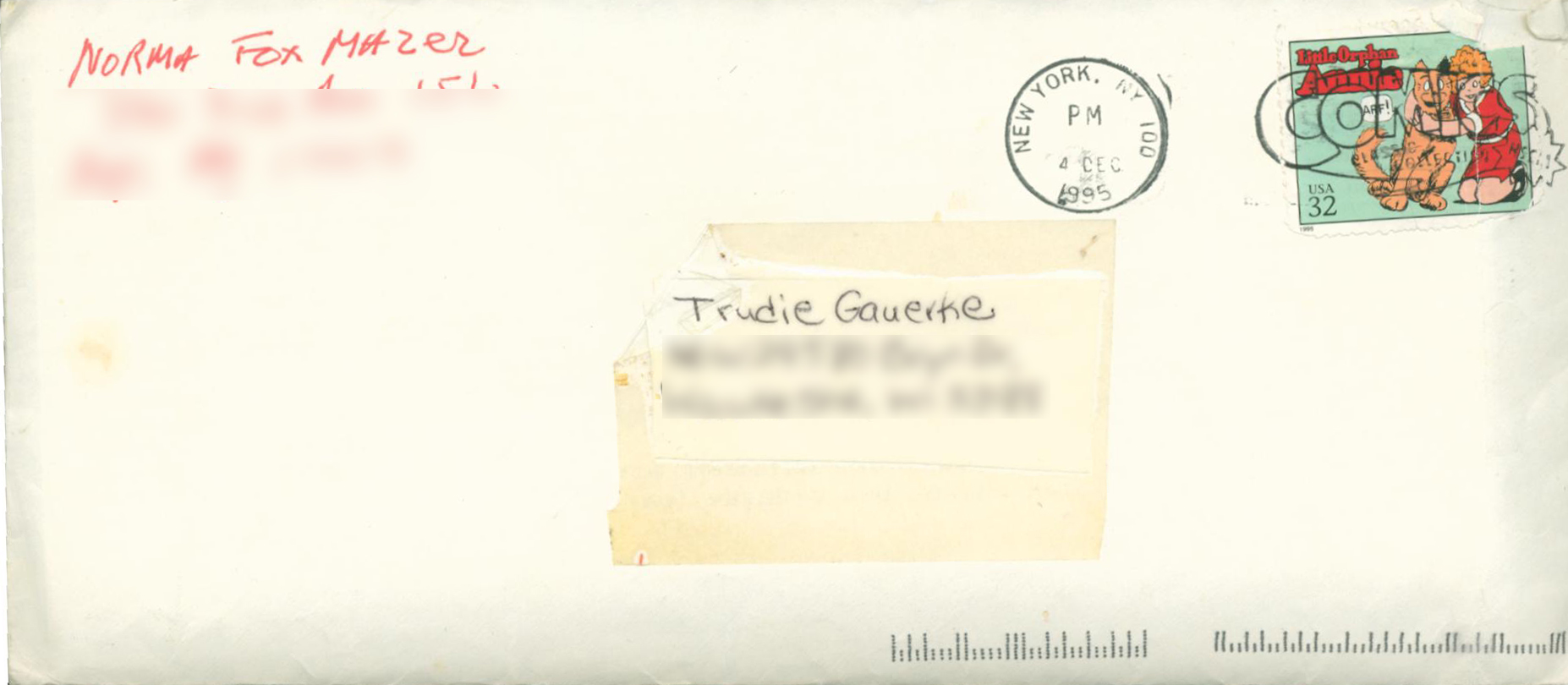
When I was young, there was no real web yet, nor email, just fan mail, and I wrote to just one person. This month marks the second anniversary of the passing of that person, the wonderful author Norma Fox Mazer. In remembrance of her, the following is her letter responding to my fan mail.
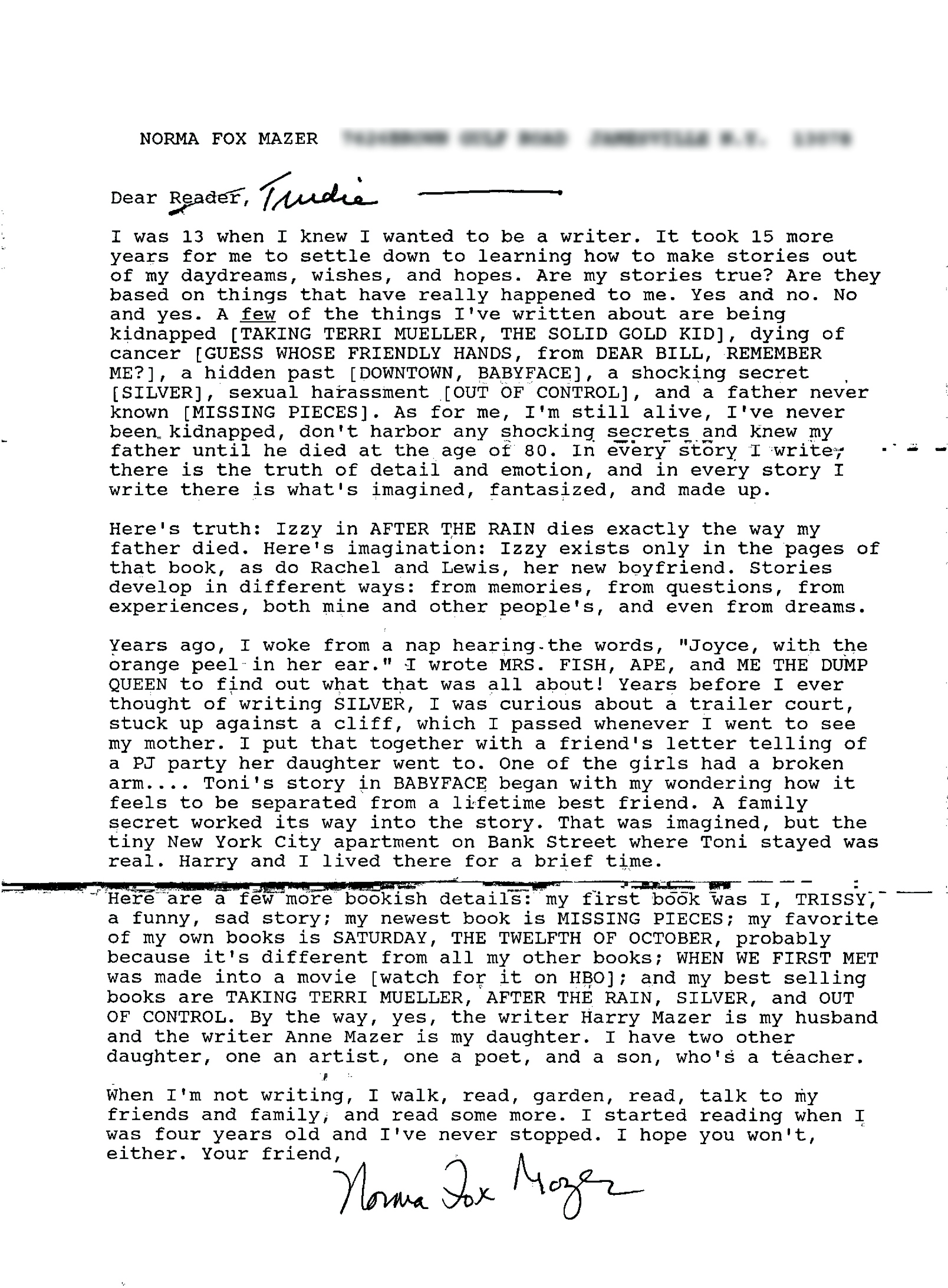
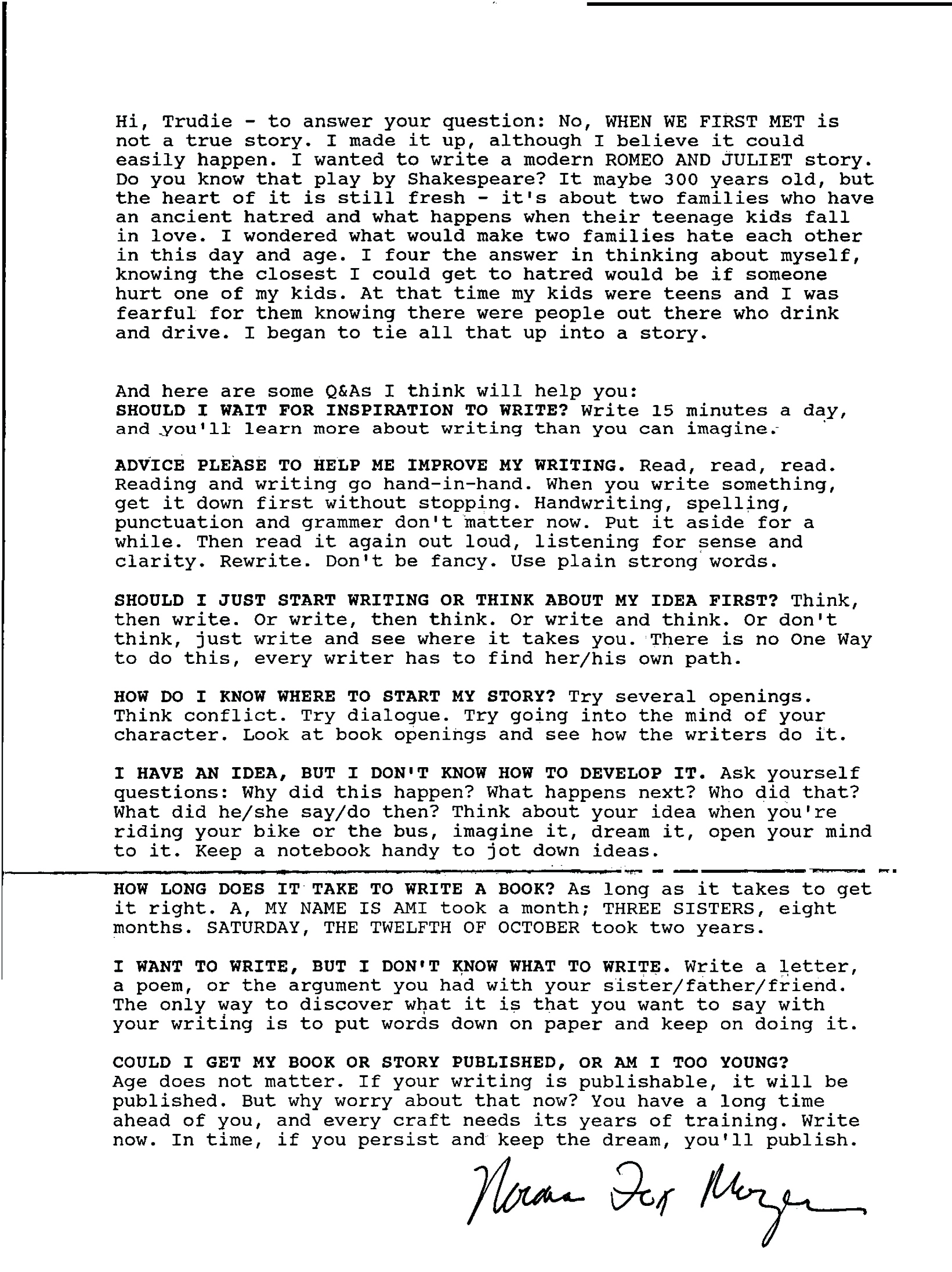
Though undated, the postage mark indicates the letter was sent in December of 1995 when I would have been in the eighth grade. Receiving this response had such a significant effect on me that I found myself returning to read it repeatedly for encouragement. Convinced of the importance of writers interacting with young readers, I’m delighted to see that Norma Fox Mazer’s example is carried on by one of her own children, the author Anne Mazer, who not only blogs, but regularly posts on Twitter.
Later this month, I’ll share an essay that this correspondence inspired as well as a second letter from her. In the meantime, I’m focusing on her advice to “read, read, read” and to “just write and see where it takes you.”


 Trudie Gauerke
You must be logged in to post a comment.