
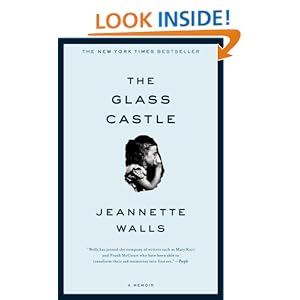
Half full, half empty. Despite the consistency of Jeannette Walls’s candid storytelling, her two most popular works, The Glass Castle and Half Broke Horses, give starkly opposing impressions. Both are the stories of individual women whose lives are filled with adversity. Each book’s close relationship with a variety of uniquely American communities and events makes them worthwhile contributors of a chapter in the larger literary biography of our nation.
However, whereas the narrator in Horses scorns pity, even when warranted, Castle assumes an empathetic audience in order to climb a moral pedestal and boast of loving flawed parents–without offering sufficient grounds for such affection. Perhaps these divergent attitudes are a natural result of the distance between Walls and her subjects, Castle being Walls’s memoir while Horses is fiction based on the life of Walls’s grandmother. Nonetheless, Castle is one of many books in the growing Traumatic Childhood genre, which includes Andre Dubus III’s Townie, Wolff’s This Boys Life, Burroughs’s Running With Scissors and many others. Horses, on the other hand, has a much more humbly triumphant—and therefore rare—perspective. It’s a case of choosing the half full glass of gin over the half empty box of tissues. If you can read only one, I’d read this, not that.
THIS THAT


- The Glass Castle
 Trudie Gauerke